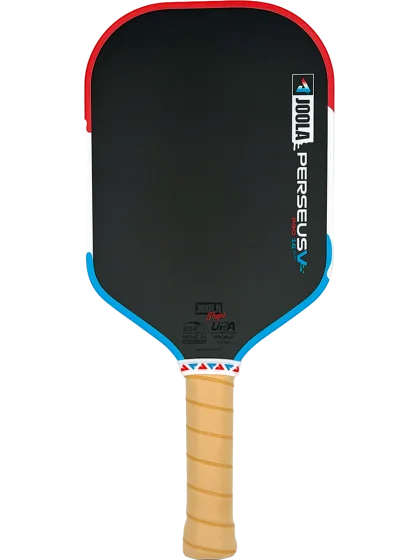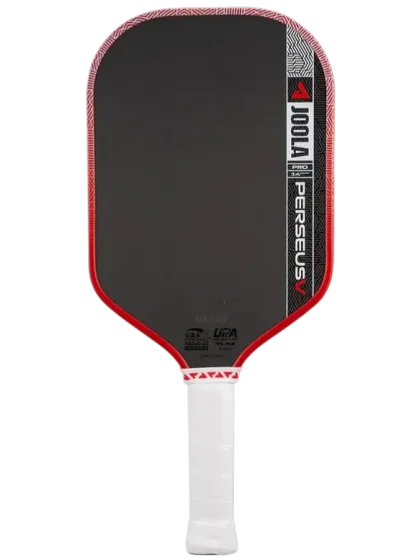
JOOLA Perseus Pro V 14mm vs 16mm: Which One Should You Choose?
The JOOLA Perseus Pro V is available in both 14mm and 16mm configurations, and while the two paddles share the same elongated Perseus shape, carbon fiber surface, 5.5-inch handle, and foam-enhanced polypropylene construction, they do not play exactly the same.
The choice is not simply “14mm for power, 16mm for control.” Based on the measured performance data, the 16mm version actually produces the stronger overall power profile, while the lighter 14mm version offers the quicker and more maneuverable setup.
For most players, the decision comes down to this: choose the 14mm if you prioritize hand speed and maneuverability; choose the 16mm if you want more stability, power, spin, and an overall more substantial paddle.
Quick Verdict
JOOLA Perseus Pro V 14mm: Best for players who want a lighter, faster Perseus with easier acceleration during counters, speedups, and quick exchanges at the kitchen.
JOOLA Perseus Pro V 16mm: Best for players who want the more complete performance package, with higher measured power, better stability, slightly more spin, and more mass behind the ball.
Paddle Knight Pick: Perseus Pro V 16mm for most advanced all-court players. The 14mm becomes the more attractive option when hand speed and maneuverability are the priority.
Performance Comparison
Metric Perseus Pro V 14mm Perseus Pro V 16mm Advantage Power 56/100 71/100 16mm Pop 37.52 MPH 37.52 MPH Tie Spin 77/100 81/100 16mm Static Weight 7.76 oz 7.95 oz 14mm is lighter Swing Weight 113 117 14mm is quicker Twist Weight 5.93 6.26 16mm is more stable Balance Point 242 mm 244 mm Very similarPower: The 16mm Has the Clear Edge
The biggest surprise in this comparison is power. Conventional paddle logic often suggests that a thinner 14mm core should be the more aggressive option, but the measured numbers tell a different story here.
The Perseus Pro V 14mm scores 56/100 in power, while the 16mm reaches 71/100. That is a meaningful difference.
The 16mm also carries slightly more static weight at 7.95 oz compared with 7.76 oz for the 14mm. Combined with its higher swing weight, the 16mm puts more effective mass behind drives, serves, and finishing shots.
Players who generate their own racquet-head speed may still enjoy the faster acceleration of the 14mm, but if the goal is simply to produce the heavier ball, the numbers favor the 16mm.
Pop: Essentially Identical
Both paddles measure 37.52 MPH in pop, making this category a statistical tie.
This is important because it means choosing the 16mm does not require giving up the quick response needed for counters and speedups. Likewise, the 14mm should not automatically be considered the “poppier” paddle simply because it has a thinner core.
In short-stroke exchanges, both versions provide plenty of immediate response. The bigger difference is how quickly the paddle itself can be moved into position.
Hand Speed and Maneuverability: Advantage 14mm
This is where the 14mm earns its strongest argument.
At 7.76 oz with a swing weight of 113, the 14mm is lighter and easier to accelerate than the 16mm at 7.95 oz and 117 swing weight.
A four-point swing-weight difference is noticeable, particularly during rapid hand battles at the kitchen. The 14mm changes direction more easily and requires slightly less effort to get moving.
Players who frequently counter, flick, speed up off the bounce, or feel that elongated paddles are sometimes sluggish may prefer the 14mm for exactly this reason.
The 14mm therefore should not be viewed as the “more powerful Perseus.” Its more convincing identity is the faster Perseus.
Stability and Forgiveness: Advantage 16mm
The 16mm posts a 6.26 twist weight compared with 5.93 for the 14mm.
That additional rotational stability matters when contact moves away from the center of the paddle face. During blocks, counters, and defensive volleys, the 16mm is better equipped to resist twisting in the hand.
This makes the 16mm feel more planted against pace and gives it the advantage when absorbing hard drives or redirecting fast balls at the kitchen.
The 14mm is not unstable, but its lower weight and lower twist weight trade some of that planted feel for maneuverability.
Spin: Small Advantage to the 16mm
Spin performance is strong on both paddles, but the 16mm holds a modest advantage with a 81/100 spin score compared with 77/100 for the 14mm.
The difference is not large enough to make spin the primary reason to choose one version over the other. Both should provide enough surface performance for topspin drives, rolls, serves, and aggressive third-shot drops.
Still, when the complete performance profile is considered, the extra spin gives the 16mm another small advantage.
Control and the Soft Game
The 16mm configuration is the more natural choice for players who build points around resets, drops, dinks, and controlled transitions.
Its additional mass and stability help the paddle stay composed against incoming pace, while the thicker construction provides a more substantial platform for controlled contact.
The 14mm feels quicker and more direct. That can be excellent for an aggressive player who likes to attack early, but it also puts slightly more responsibility on the player's hands during delicate shots.
For players who regularly move between defense, neutral exchanges, and offense, the 16mm offers the more balanced overall platform.
Same Shape, Different Personality
Both versions retain the familiar Perseus elongated geometry:
- Length: 16.5 inches
- Width: 7.5 inches
- Handle Length: 5.5 inches
- Grip Circumference: 4.25 inches
- Surface: Carbon Fiber
- Core: Polypropylene + Foam Enhanced
That means both paddles provide the reach and leverage players expect from the Perseus platform. The 5.5-inch handle also leaves plenty of room for two-handed backhands.
The difference comes from how the two builds distribute mass and respond during play. The 14mm emphasizes speed; the 16mm emphasizes stability and weight behind the ball.
Who Should Choose the 14mm?
The Perseus Pro V 14mm makes the most sense for an aggressive player who already generates plenty of pace and wants the quickest possible version of the Perseus platform.
- Players who prioritize fast hands at the kitchen
- Players who frequently counter and speed up
- Players who prefer a paddle under roughly 7.8 oz
- Players who find heavier elongated paddles slow during hand battles
- Players who generate their own power through swing speed
If maneuverability is the deciding factor, the 14mm is the better choice.
Who Should Choose the 16mm?
The Perseus Pro V 16mm is the stronger choice for players looking for the most complete version of the paddle.
- All-court players who want both offense and control
- Players who want more measured power
- Players who value stability during blocks and counters
- Players who want more forgiveness on off-center contact
- Players who rely heavily on drops, resets, and controlled transition play
- Players who prefer a more planted elongated paddle
The 16mm does carry a little more swing weight, but that tradeoff brings meaningful gains in power and stability.
14mm vs 16mm: The Simplest Way to Decide
If you are stuck between the two, think about what you want to improve rather than simply choosing based on core thickness.
Choose the 14mm if your priority is:
Hand speed → maneuverability → faster acceleration → aggressive counters.
Choose the 16mm if your priority is:
Power → stability → forgiveness → spin → all-court consistency.
Paddle Knight Verdict
The JOOLA Perseus Pro V 16mm is the more compelling all-around paddle in this matchup.
It produces the higher measured power score, slightly more spin, and noticeably better rotational stability while giving up only a modest amount of maneuverability. Even more importantly, pop is identical between the two versions, so the thicker paddle does not appear to sacrifice short-stroke response.
The 14mm, however, has a very clear purpose. At 7.76 oz with a 113 swing weight, it is the better option for players who want the Perseus shape without as much mass to move around during rapid exchanges.
For most all-court players: choose the 16mm.
For players who prioritize hand speed above stability: choose the 14mm.
These are not simply two thicknesses of the same paddle. The 14mm is the quicker, more maneuverable Perseus; the 16mm is the stronger, more stable, and more complete Perseus.